
Take a hypothetical borrower: Marcus, 29, with a 620 credit score. He has a couple of late payments from two years ago, a maxed-out store card and a car repair bill he put on a card at 29%. His bank’s personal loan page wants a long relationship and good credit, so he doesn’t bother applying there. He needs about $9,000 and wants to know who will actually say yes.
Universal Credit was built for borrowers like Marcus. It’s a lending brand of Upgrade, Inc., the online lender, and its pitch is simple: fixed-rate personal loans for people with fair or rebuilding credit. The catch is equally simple. Approval comes with high fees and, for many borrowers, a high APR.
JustMobs rating: 3.6/5.
Who runs Universal Credit
Universal Credit is powered by Upgrade, which also does business under the Universal Credit name and owns and operates the website. Loans are made by Upgrade’s bank partners, not by Universal Credit itself. In practice, that means Upgrade’s underwriting, servicing and app sit behind the product. Universal Credit is the version marketed to the fair-credit crowd.
Terms as of 2026
- APR: 11.69% to 35.99%, fixed
- Loan amounts: up to $50,000
- Terms: 36 to 60 months
- Origination fee: 5.25% to 9.99%, deducted from the loan proceeds
- Funding: sent within one business day after required verifications clear; direct payments to third-party creditors may take up to two weeks
- Rate check: free and doesn’t affect your credit score
The lowest rates require two things: enrolling in autopay and using part of the loan to pay off existing debt directly. Universal Credit doesn’t publish a minimum credit score, and some loan offers may not be available in every state.
What Marcus would actually pay
Universal Credit’s own disclosure example is a useful reality check. A $10,000 loan over 36 months at a 28.47% APR carries a 22.99% interest rate and a 7% origination fee. The borrower receives $9,300, pays $387.05 a month and repays $13,933.62 in total.
Read that again from Marcus’s side. If he needs $9,000 in hand, he has to borrow more than $9,000 because the fee comes off the top. And over three years, the loan costs him nearly $4,000 more than he borrowed. That is expensive money. But compare it to what he has now: a 29% card where the minimum payment barely touches the principal. A fixed loan with a firm end date can still be the better deal, as long as the APR on his offer is lower than his card rates.
The origination fee is the piece people miss. Even the minimum, 5.25%, is higher than many lenders’ minimum, and the floor matters because it applies even to borrowers with good credit. That’s why Universal Credit makes the most sense for fair credit. If your score is in the 700s, you’ll find cheaper options.
Where it’s strong
Access. Universal Credit’s whole reason to exist is lending to people other lenders pass over. For a borrower with a 600s score, it may be one of the few online options that produce a real offer.
Loan size. Up to $50,000 is generous for a fair-credit lender. Many competitors in this segment cap loans at $30,000 to $40,000.
Speed. One business day after verification is fast. Just note that the clock starts after verification, which can take time if your documents need review.
Debt payoff help. Paying creditors directly earns a better rate and makes sure the money goes where it should.
Where it falls short
The fee floor. A 5.25% minimum origination fee means no one gets a fee-free loan here.
No short terms. The minimum term is 36 months. If you only need a small loan you could repay in a year or two, you’re stuck with a longer schedule, though you can prepay.
Limited transparency on qualification. With no published minimum score, you only find out by checking your rate.
No branches. Everything is online and by phone. Borrowers who want in-person help should look at OneMain Financial, which lends $1,500 to $30,000 through a branch network and allows secured loans backed by a vehicle. OneMain’s lower maximum and possible vehicle lien are trade-offs, but its smaller minimum loan and in-person underwriting suit some fair-credit borrowers better.
Before you apply
A few steps will help you get the best offer and avoid an expensive mistake.
- Pull your credit reports. Check all three for free at AnnualCreditReport.com. Disputing an error before you apply can lift your score and your offer.
- Know your current rates. List each debt with its APR. A loan only makes sense if the new APR, including the fee, beats what you’re paying.
- Size the loan for the fee. Divide the amount you need by one minus the fee percentage. With a 7% fee, $9,000 in hand requires roughly a $9,680 loan.
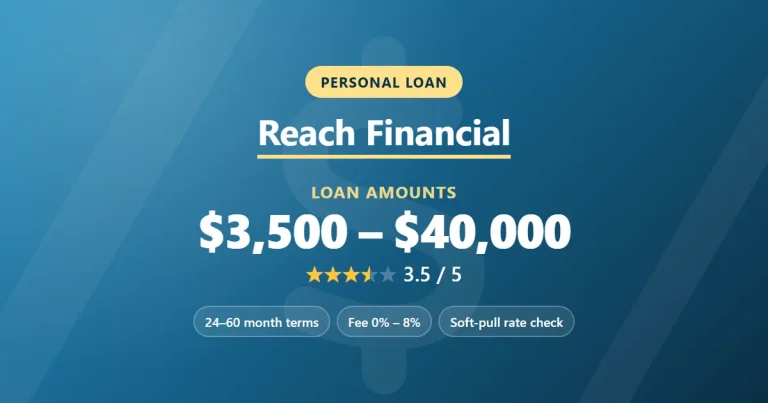
- Prequalify in several places on the same day. Rate checks are soft pulls. Compare Universal Credit against at least one other fair-credit lender, such as Reach Financial.
- Turn on autopay and choose direct payoff. Both are required for the lowest rates.
- Plan for the cards. If you pay them off, don’t run them back up. That’s the most common way consolidation backfires.
When you’re ready, you can check your rate on Universal Credit’s website. Rates and fees are as of 2026 and can change.
Frequently asked questions
Is Universal Credit the same as Upgrade?
Universal Credit is a brand of Upgrade, Inc. Upgrade operates the site and services the loans, which are made by Upgrade’s bank partners. The terms advertised under each brand may differ, so compare both if you’re curious.
Can I get a loan with a 580 credit score?
Universal Credit doesn’t publish a minimum score, so there’s no way to know without checking. The rate check is free and won’t affect your score, so it costs nothing to find out.
Why do I receive less than the amount I borrowed?
The origination fee, between 5.25% and 9.99%, is subtracted from the loan before funds are sent. You still repay the full loan amount plus interest.
What happens if I pay late?
Universal Credit notes that late payments or other fees in your borrower agreement may increase the cost of the loan. Late payments reported to the credit bureaus can also lower your score, which defeats the purpose of borrowing to rebuild.